The State of MBSE: How Organizations are Achieving Success, Managing Expectations, and Navigating Resistance to Change
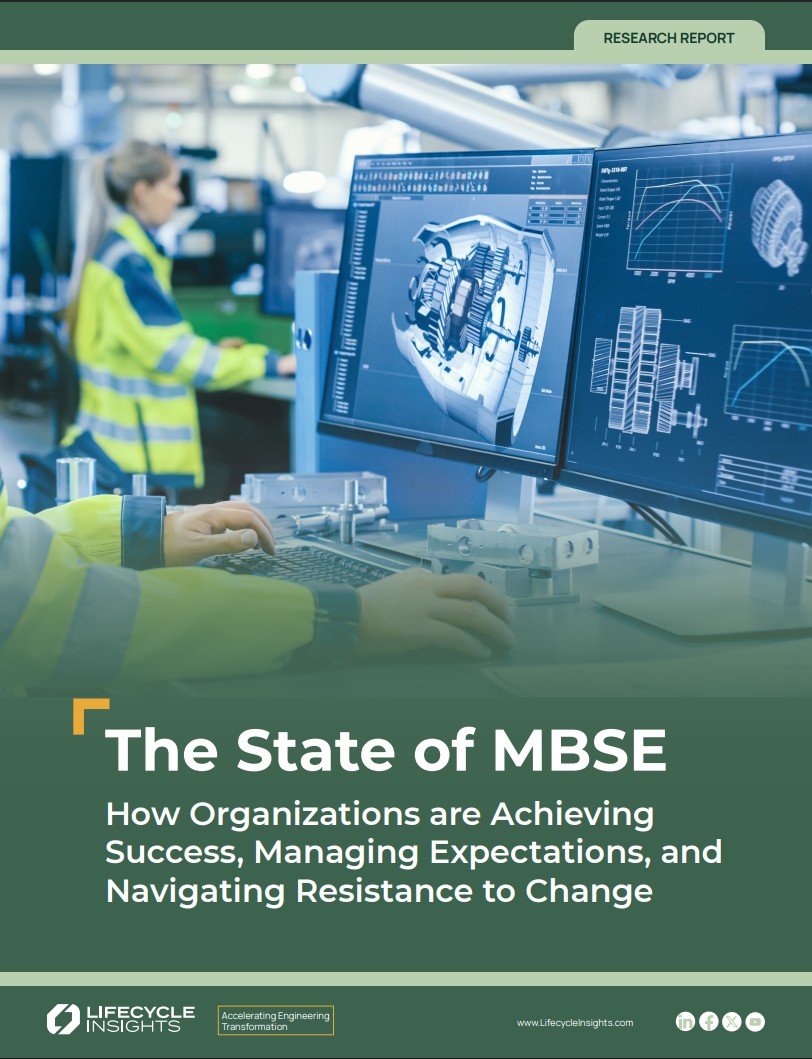
Findings from 145 engineering leaders and executives reveal that 74% of MBSE initiatives achieve strong or outstanding success, yet a widening gap between expectations and realized outcomes is limiting the cross-functional value organizations set out to unlock.
Get the Full Report
Enter your details below for instant access to the complete findings and recommendations.
Key Findings
A preview of what the data reveals
of organizations report strong or outstanding success with their MBSE initiatives, while complete failure is virtually nonexistent
gap between organizations that expected MBSE to improve cross-functional collaboration and those that realized it as an outcome
of MBSE initiatives sit in the moderate "zone of engagement" where resistance becomes productive feedback that improves implementation
What You'll Learn
Inside the full report
MBSE has matured into a proven methodology, but the data surfaces a paradox change agents cannot ignore. Nearly three-quarters of organizations (74%) report strong or outstanding success with their MBSE initiatives - yet most face real internal resistance, and the wins skew heavily toward productivity, leaving collaboration and quality gains on the table.
Expectations have shifted. Version 2.0 goals - collaboration (67%), lifecycle integration (64%), and automation (61%) - now dominate over Version 1.0 staples like architecture and traceability. But realized outcomes trail badly. Traceability shows the widest gap: 48% expected, 9% realized. Collaboration is close behind at 67% vs. 24%.
Resistance is less the threat than leaders assume - 38% of initiatives sit in the productive "zone of engagement" where pushback improves implementation. The real barrier is the compound learning curve: MBSE collapses systems thinking and SysML tooling into a single, inseparable obstacle for non-experts.
Download the full report for the Version 1.0 vs. 2.0 breakdown, the resistance spectrum, and recommendations on reframing resistance as feedback, closing the collaboration gap, and attacking the learning curve directly.
About the Research
The 2026 InsightEX Engineering Transformation Study surveyed 145 engineering leaders and executives in Q4 2025 and Q1 2026 across hard goods manufacturing verticals: aerospace and defense, transportation and mobility, heavy equipment, industrial and commercial machinery, and medtech. Medium-sized firms led the sample at 49%, followed by large enterprises at 27% and smaller firms at 24%. Respondents skewed toward leadership, with executive management at 65% and engineering leadership at 35%. Geographic coverage was transatlantic: Europe 56%, North America 44%.
About the Author